Swiss Asset Management on the Global Stage
Despite impressive AuM growth, Swiss Asset Managers' global market share has contracted. This white paper explores the drivers behind this shift and charts the path ahead for Switzerland's Asset Management industry.
By The Good Guys Company and Lamb Quantitative Research
Christian Cebreros, Managing Partner at The Good Guys Company, together with Mads Døssing, Platform Strategist at The Good Guys Company, Andreas Merbecks, Senior Advisor to The Good Guys Company, and Alistair Lamb, Researcher at LambQR, discuss the developments of the Asset Management industry with a focus on the Swiss industry.
Swiss Asset Managers' Global Market Share Declined
In the evolving landscape of global finance, the Swiss financial industry, together with its Asset & Wealth Management sectors is presumed to be strong. Novel developments over the past decade, however, demand a reexamination of this presumption, and a check on the health of Swiss Asset Management, and its place on the global competitive stage.
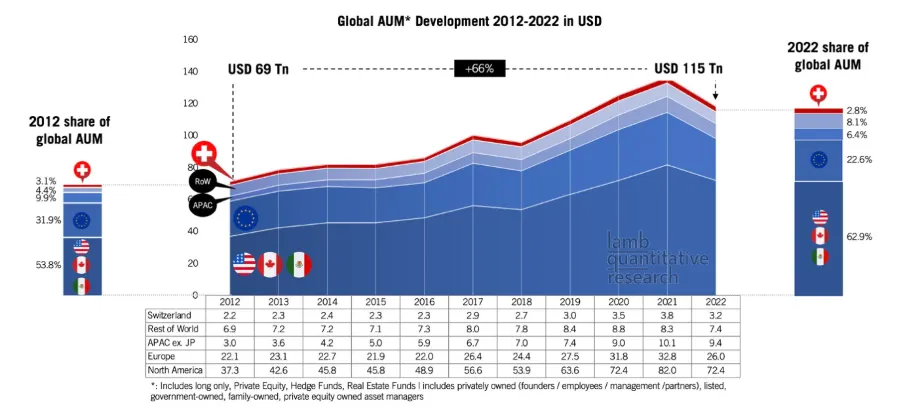
The global industry experienced remarkable growth in assets under management (AuM) from 2012 to 2022. Switzerland participated in this global trend: Swiss Asset Managers' AuM increased by an impressive USD 1 trillion during this period, which corresponds to a 46% growth rate. Yet, in the midst of this growth, potential challenges are also present, in particular, when comparing the Swiss Asset Management industry with its North American and European peers. An initial finding that sparked this analysis was: despite the substantial growth in Swiss AuM, the market share of Switzerland within the global landscape has contracted, slipping from 3.1% in 2012 to 2.8% in 2022. This drop of 12% compels us to reflect on the global industry dynamic that predicated this change, and whether Switzerland is positioned to remain a relevant player in the years to come.
This white paper is a collaborative endeavour that draws upon our internal industry experts and leverages a strategic partnership with the quantitative research house, Lamb Quantitative Research. Together, we aim to provide a comprehensive view of the Swiss Asset Management landscape, offering an objective assessment of the current state of Swiss Asset Management in the global industry.
Market Returns are the Most Important Driver for Growth
The first section conducts a comparative analysis of AuM growth. A closer look at the three components of AuM growth: net flows, market returns, and M&A across North America, the European Union, and Switzerland.
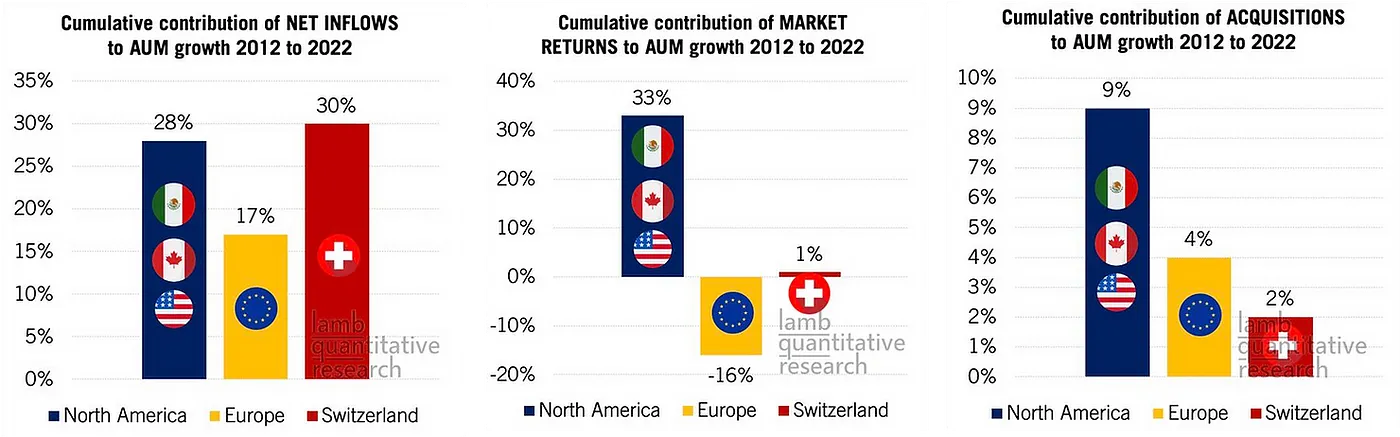
The Role of Net Inflows: Swiss inflows keep pace with North America, outpacing Europe. Over the past decade (2012–2022), net inflows represented an impressive 30% of Swiss Asset Managers' cumulative AuM growth. This is well above the 17% contribution net inflows made to European managers' AuM growth, and marginally exceeds the 28% contribution of net inflows to North American managers' growth.
The Impact of Market Returns: Market returns of Swiss managers lag those of their North American counterparts. During the 10-year period, Swiss Asset Managers saw a modest 1% contribution to AuM growth from market returns. This is flagging significantly behind the 33% contribution of market returns to North American managers' AuM growth.
The Quiet Role of M&A Activity: For Swiss managers, M&A activity has contributed 2% to its AuM growth from 2012 to 2022, compared to North American managers' 9% and European managers' 4%.
When reflecting on the three sources of growth, we conclude that poor market returns compared to those of North American managers is a critical factor in the Swiss managers' loss of market share on the global stage.
Deeper into the Market Return Factor
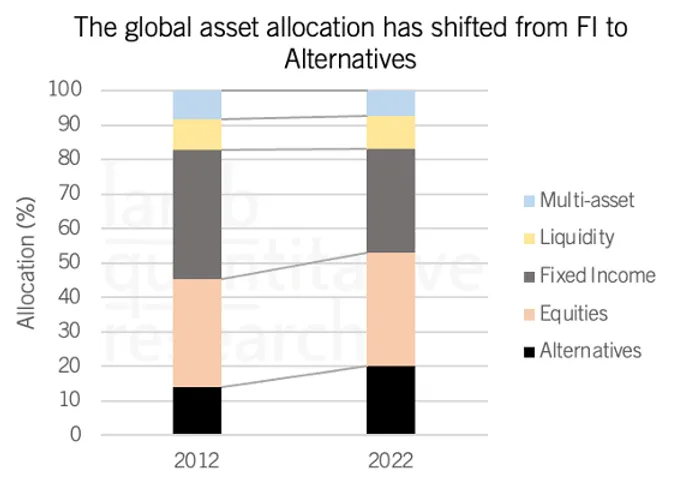
Asset Class Preference — Equity vs. Fixed Income: North American managers have thrived on equity returns, harnessing the benefits of this high-return asset class. In contrast, Swiss and European counterparts have had much higher exposure to fixed income, resulting in lower volatility but also lower returns.
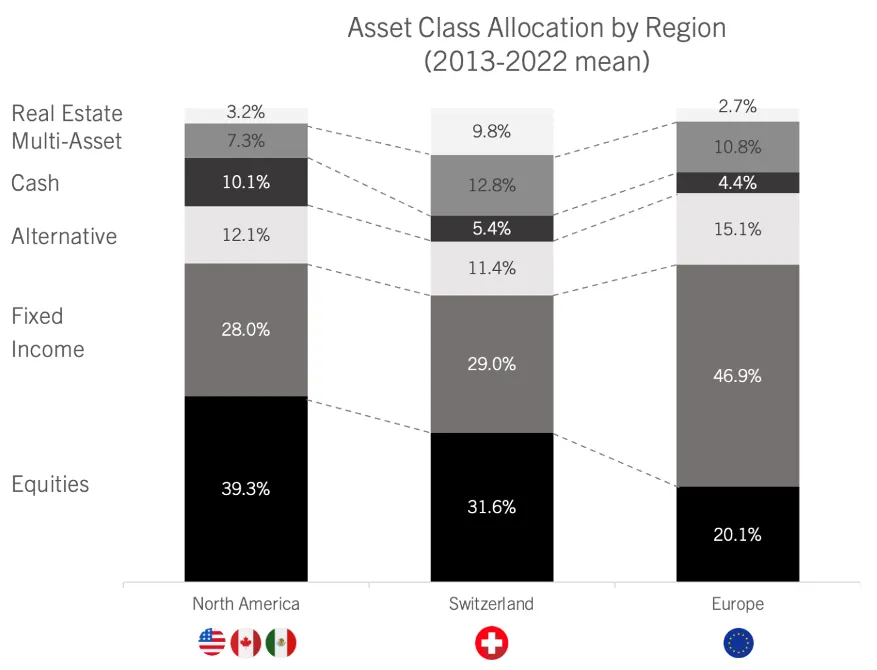
The 'Home Bias' Phenomenon: Swiss and European managers manifest a bias for domestic investments, which has further reduced their market returns relative to their North American peers. This is because Swiss and European equities and fixed income have had lower returns compared to their respective North American equivalents.
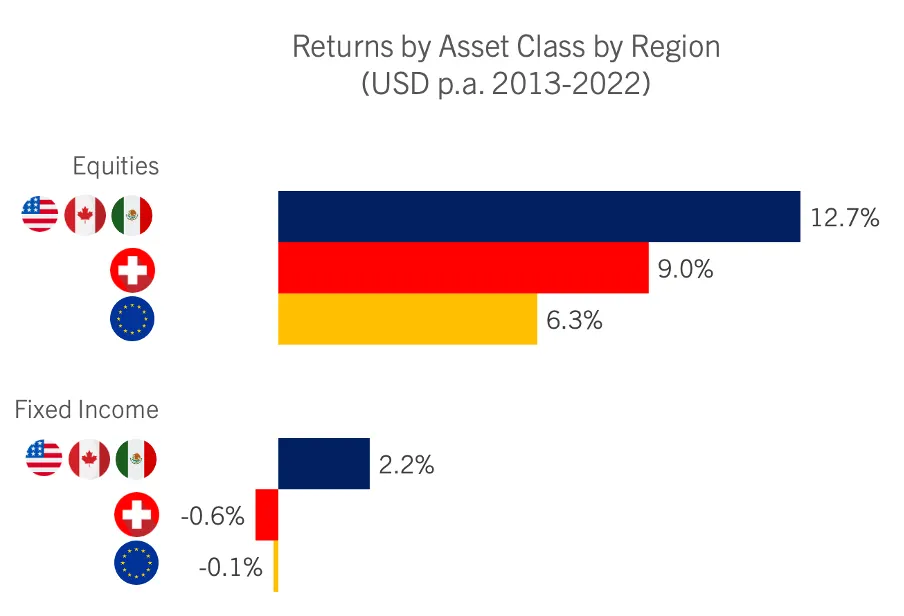
Both asset class allocation and home bias within each asset class have clearly detracted from Swiss asset managers' potential AuM growth.
Declining AuM Margins and the Focus on Alternatives
The trend is clear: AuM margins are on a consistent decline across all regions, with a global average of -3.2% per annum.
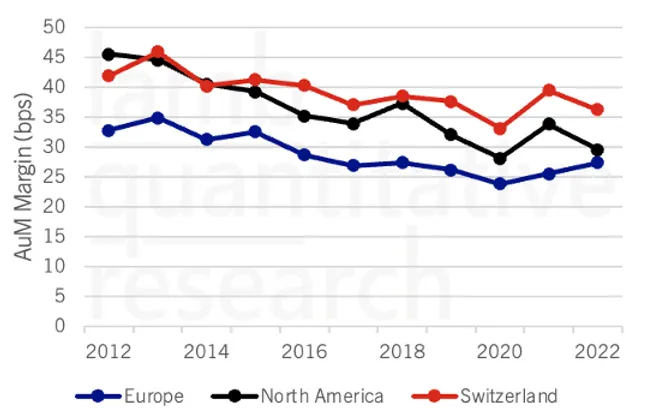
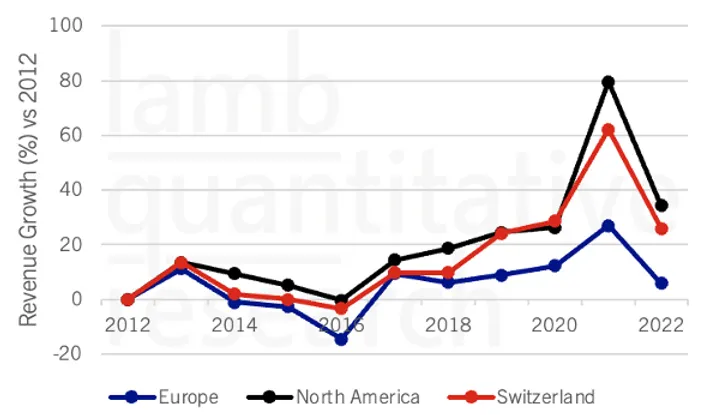
Against this backdrop of diminishing margins, the growth in AuM remains a powerful counterbalance. Thus, managers have still achieved revenue growth, averaging 2.5% per annum globally.
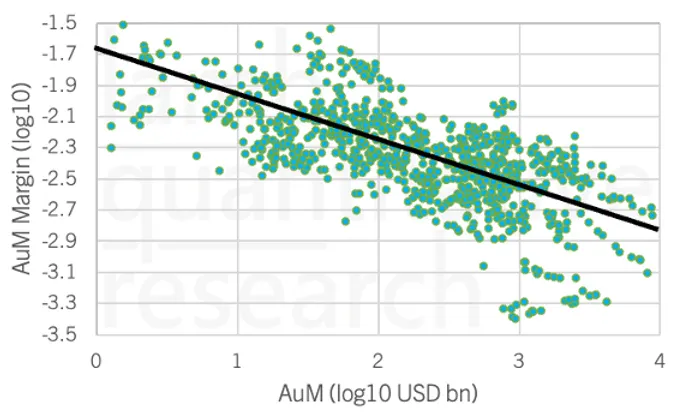
A novel, highly relevant structural market phenomenon: the global industry exhibits decreasing returns to scale of AuM margin. The higher a manager's AuM, the lower the AuM margin. This counterintuitive trend challenges long-held beliefs about the economies of scale in the Asset Management industry.
Swiss Alternative Management Success and Traditional Challenges
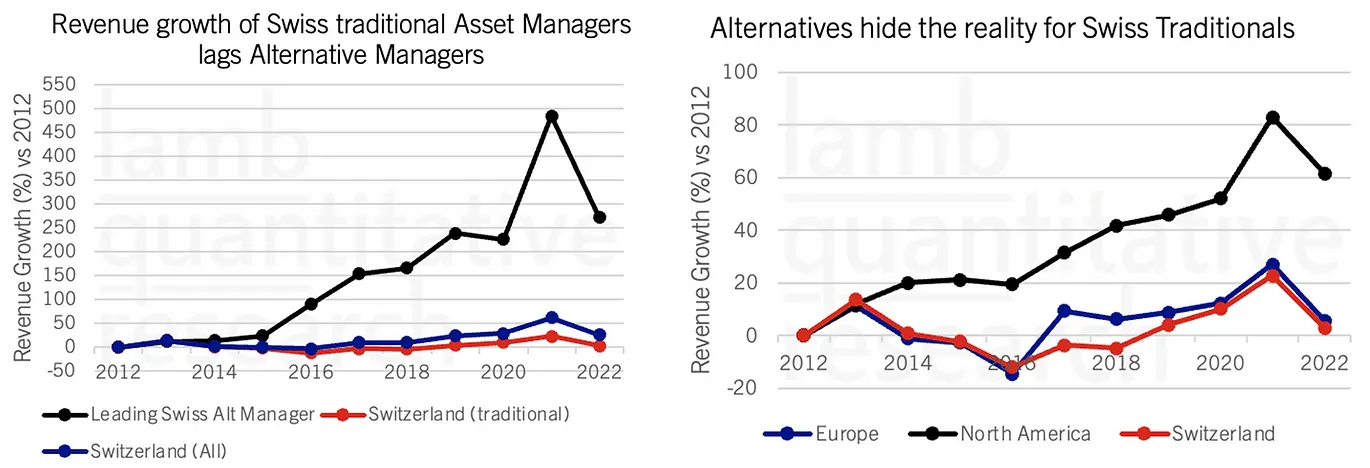
While alternative managers have experienced a decline in AuM margin from 183 basis points in 2012 to 83 bps in 2022, these remain far higher than the AuM margin of traditional managers, which averaged 27 bps.
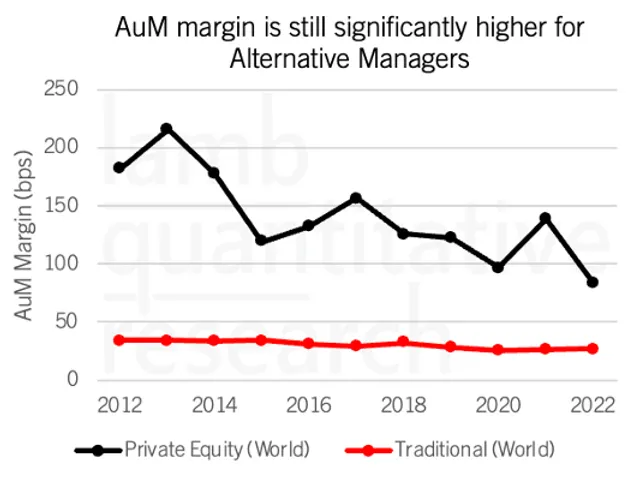
The Swiss alternative management landscape is characterized by the existence of a single, dominant player. Other Swiss managers offer products in the alternatives space but have not enjoyed the same success. Simultaneously, revenue growth for Swiss traditional managers is lower even than their European peers and is effectively flat since 2012.
The shift towards alternatives has coincided with a smaller growth rate of allocation to fixed income. This has been driven in part by low and negative real returns of fixed income products, but this trend may unwind somewhat in the current high-interest-rate environment.
Conclusion: Observing a Decade in Swiss Asset Management
Market Share Dynamics: Swiss Asset Managers' market share of global AuM decreased, seeing a decline of 12% from 2012 to 2022 despite a 46% growth in AuM.
AuM Growth — Balancing Act: Swiss Asset Managers had strong net inflows, beating their European peers but trailing North American peers. Market returns emerged as a challenging arena with a modest 1% contribution, in stark contrast to North America's 33%.
Revenue Landscape: North American managers experienced higher revenue growth. Swiss managers transitioned at a slower pace into alternatives, even as these investments proved lucrative amid a low-interest-rate environment.
Profitability Convergence: The apparent convergence of net profit margins of alternative managers to that of traditional managers raises important questions about the future profitability of alternative products.
This paper is a prelude to a longer journey. Subsequent papers will investigate the state of the Asset Management industry today and chart the path forward.